
ESP-MTS Micro Tuning
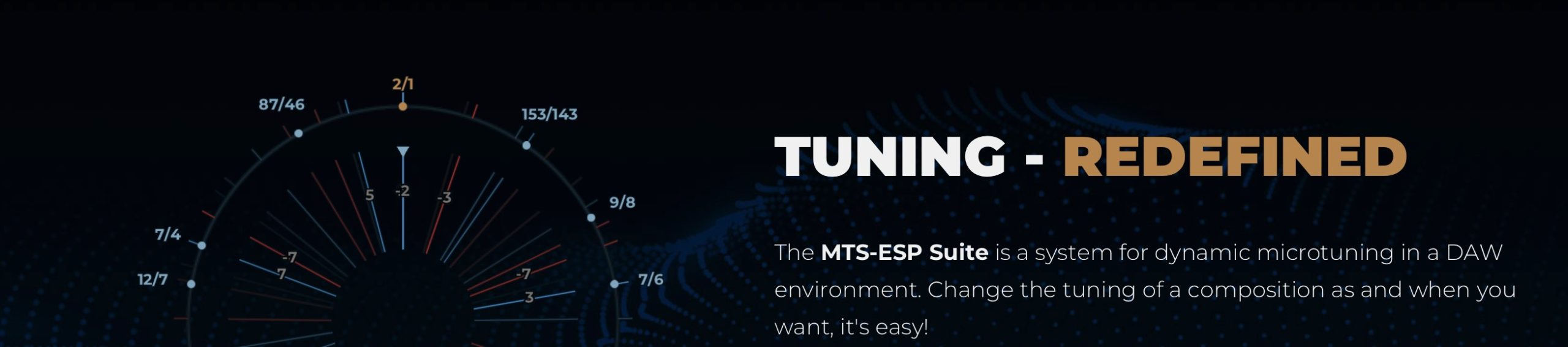
We have just updated our Modus, Prep2 and Tetrad instruments with support for the MTS-ESP tuning format. This post gives a brief overview of how that works.
We’ve just finished work on a new version of the guitar algorithm—which used to run (very slowly) on the NESS project’s GPUs. This algorithm appeared in a paper presented at DAFx-14. There have been a lot of recent advances in algorithm design that have allowed us to speed up performance for a full six-string guitar to the realtime threshold. This is a full time domain model, including the strings, frets, a backboard (for fretless playing), models of the individual fingers, all of which involve collision modeling. Also included is the geometric nonlinearity in the string itself, allowing for pitch glides and pitch bending. It’s fast because we are now able to get robust performance without using expensive iterative solvers like the Newton Raphson method. You can get all kinds of interesting behaviour—the rattling of strings against the frets, the ability to play on the harmonics and more. The big looming issue, of course, is user control—there are a lot of control streams and parameters to manage!
This is a companion page to the paper published at the 2024 DAFx conference.
We have just updated our Modus, Prep2 and Tetrad instruments with support for the MTS-ESP tuning format. This post gives a brief overview of how that works.
In this video Gadi Sassoon explains the core concepts of our new instrument Tetrad.

Talking physical modelling, augmented instruments and harpsichords with the Physical Audio team.
